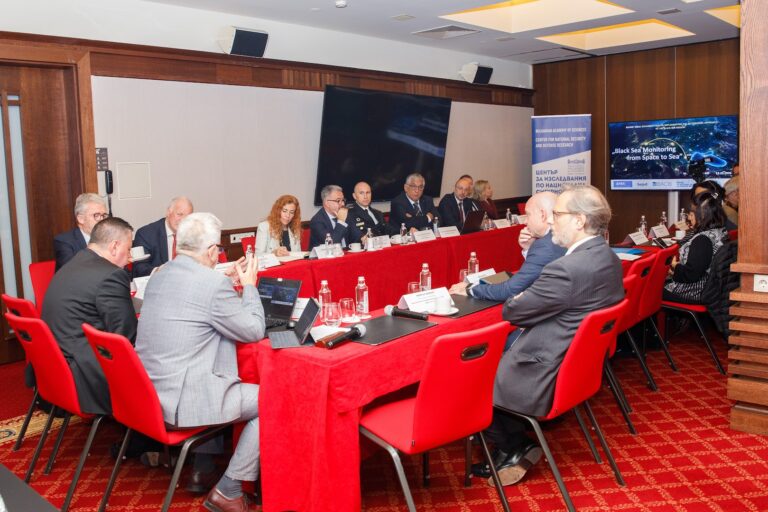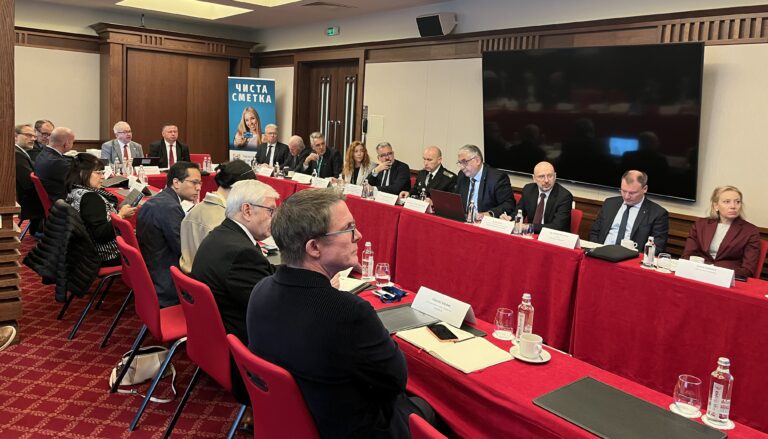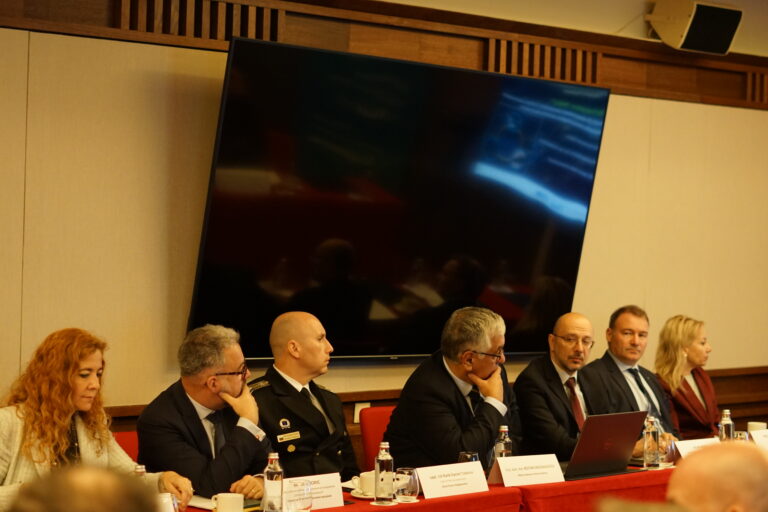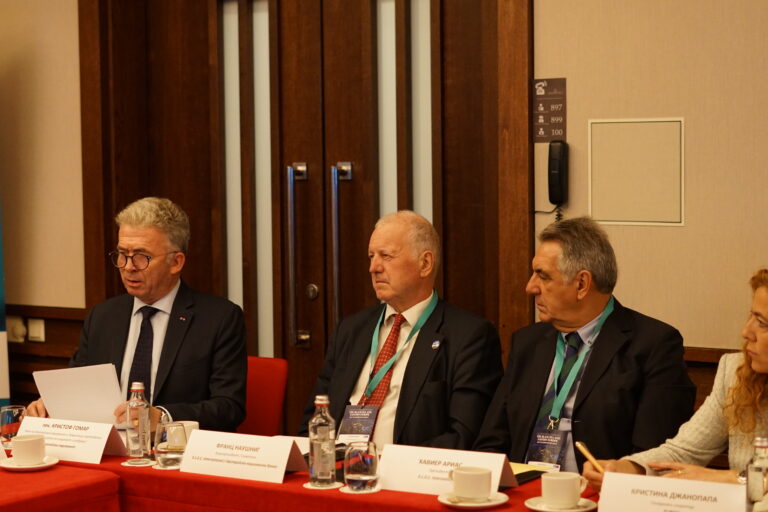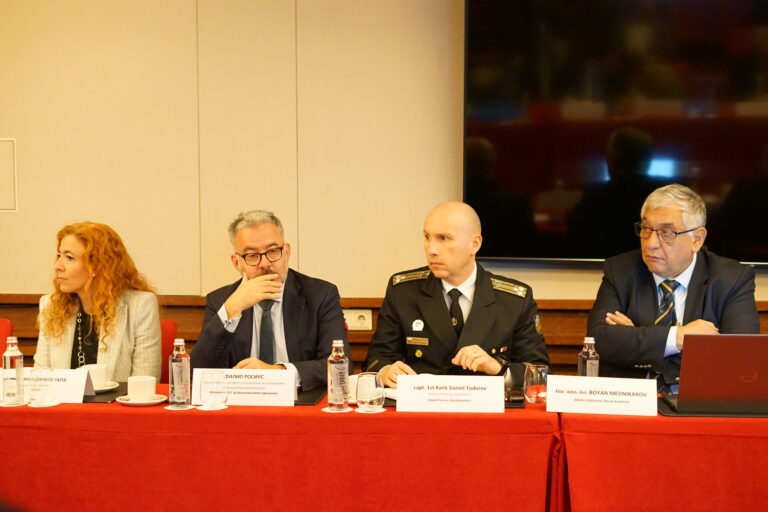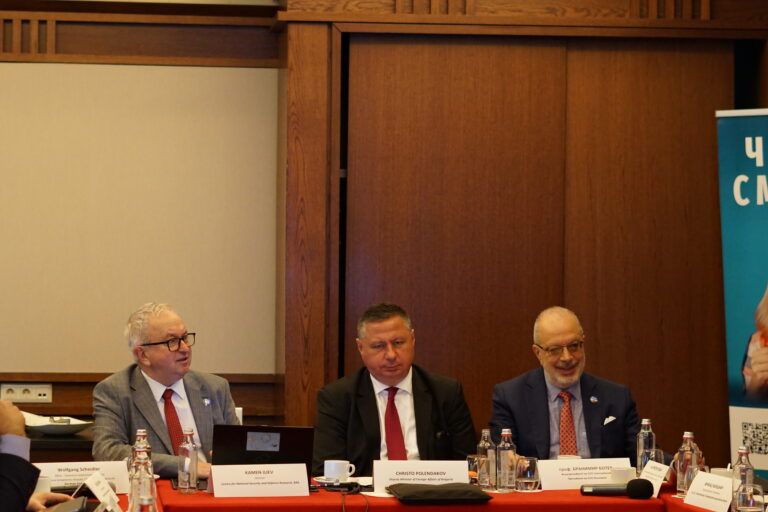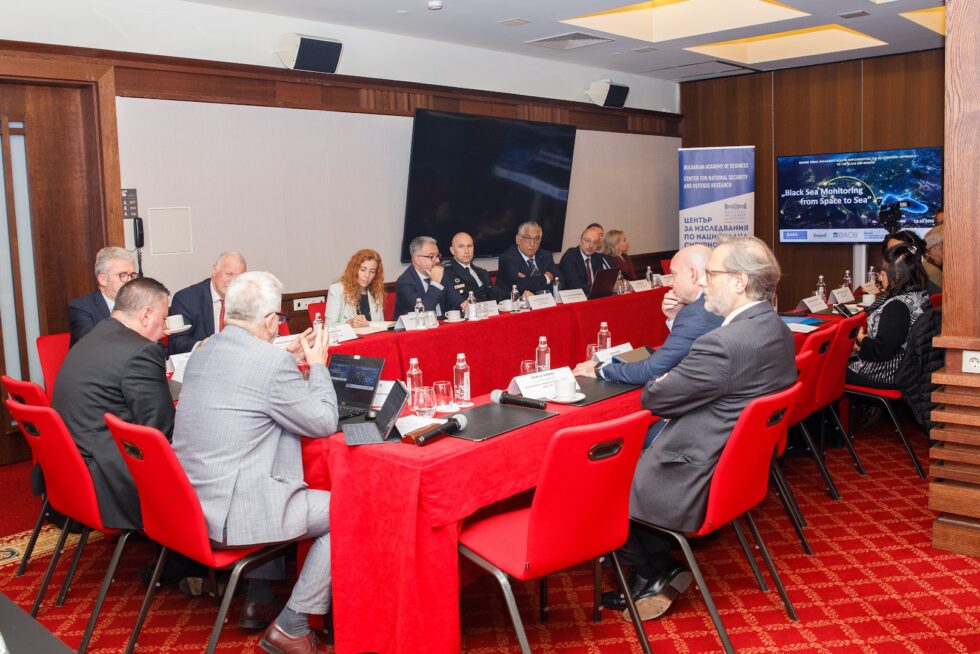
On October 13, 2026, the Ministry of Foreign Affairs of the Republic of Bulgaria, the European League for Economic Cooperation (E.L.E.C.), and the Center for National Security and Defense Research at the Bulgarian Academy of Sciences (CNSDR-BAS) organized a roundtable titled: “Bulgaria’s Role in Implementing the EU’s Strategic Approach to the Black Sea Region.” The initiative facilitated a discussion on opportunities for Bulgaria to participate more actively in European efforts to strengthen security and sustainable development in the Black Sea region.
The event was officially opened by Christo Polendakov, Deputy Minister of Foreign Affairs and President of the Danube Commission. Introductory remarks were delivered by Prof. Branimir Botev, Vice-President of E.L.E.C. International and President of E.L.E.C. Bulgaria.
Kamen Iliev, Director of CNSDR-BAS, opened the discussion by presenting the concept: “Black Sea Monitoring: From Space to Sea.” This concept focuses on the integration of space-based, maritime, and underwater data to enhance maritime domain awareness, facilitate the early detection of threats, protect critical infrastructure, and monitor the state of the marine environment.
The discussion included representatives from key European institutions and organizations, among them Gen. Christophe Gomart, Member of the European Parliament and Vice-Chair of the Subcommittee on Security and Defence; Javier Arias, President of E.L.E.C. INTERNATIONAL; and Michael Fazekas, Executive Coordinator of the Southeast European Cooperative Initiative (SECI). They emphasized the exceptional timeliness of the event and expressed their gratitude to the Bulgarian Academy of Sciences for organizing it. Other participants included representatives from the European Union Agency for the Space Programme (EUSPA), the European Maritime Safety Agency (EMSA), the Association of European Space Agencies and Offices (EURISY), the Austrian Central Bank, and the German Embassy in Sofia. The Bulgarian side was represented by the Ministry of Transport and Communications, the Black Sea Basin Directorate, the Municipality of Burgas, the Naval Forces, and the Nikola Vaptsarov Naval Academy. The discussion also featured representatives from academia (University of Minho, Portugal) and the business sector, including the leading German company Constellr, which develops and provides high-precision thermal imagery.
A key focus was placed on the use of space technologies for monitoring maritime areas, the early detection of threats, and the protection of critical infrastructure. General Christophe Gomart highlighted the need for closer European cooperation and the integration of maritime, aerial, and space-based capabilities. Representatives from EUSPA – Philippe Rosius, Head of the Situational Awareness Programme Management Department, and EMSA – Petar Kirov, Head of the Safety, Security and Surveillance Department, highlighted the importance of European maritime surveillance systems and secure satellite communications. Emphasis was also placed on the need for a preliminary assessment of existing capabilities and resources to ensure their effective utilization and prevent the duplication of already operational mechanisms.
Environmental security also featured prominently in the discussion, covering the timely detection of pollution and the monitoring of risks to marine ecosystems. The potential of satellite technologies and data exchange for the joint monitoring of the Black Sea was noted, including through regional cooperation between Bulgaria and Romania. The protection of the marine environment was framed as an integral component of safeguarding the population, fostering the sustainable development of coastal communities, and ensuring the economic stability of the region.
The experience of the Baltic Sea states which face similar challenges regarding maritime security and the protection of critical infrastructure was cited as a potential model for cooperation. The exchange of best practices and established mechanisms for interaction in the Baltic Sea could serve as a foundation for developing joint initiatives in the Black Sea region.
During the discussion, the strategic importance of Bulgaria’s full membership in the European Space Agency (ESA) was highlighted. EURISY‘s Secretary General Christina Giannopapa supported Bulgaria’s pursuit of full ESA membership, emphasizing its significance for expanding opportunities for scientific research, technological innovation, and the development of national capacity within the space sector.
It was emphasized that strengthening security in the Black Sea region requires coordinated action, technological innovation, and close cooperation among states, European institutions, scientific organizations, and the business sector. The “Black Sea Monitoring: From Space to Sea” concept outlines a potential framework for consolidating these efforts to foster a more secure and resilient region.
As a conclusion to the discussion, it was proposed to enhance cooperation between the Bulgarian Academy of Sciences and the Ministry of Foreign Affairs of the Republic of Bulgaria, including through the establishment of a joint expert working group to support the coordination and development of specific initiatives in this field.